On this page
What you actually need to start
The bare minimum is three things: people, a place, and a way to roll.
A group to play with
It can be as small as two people. Typical groups are about 4 or 5. Each game needs one Game Master, and the others at the table are the Players.
If you're the Game Master, your job is to describe the world and the people in it. If you're a player, you play a character in that world. You can swap later. For tonight, pick one.
Game Master: you describe the world and ask "what do you want to do?" Player: you are one person in that world, and you say what they try.
A place to meet
Anywhere. Online, at the park, at a cafe, or in someone's home. You don't need elaborate setups, big tables, or special gear. Get your group around a table, real or virtual. That's it.
If you are online, you need a call so you can hear each other, and a map everyone can see. Voice can be a video call. The map can be Volvelle in a browser. Players do not need an account to drop onto the free map.
Online just means a way to talk plus a way to look at the same map.
Dice
Most games ask you to roll dice. That's the chance, and half the fun: nobody at the table knows what the roll will show. You can make do with one physical set for the table. If you don't have a bag yet, you can roll here.
A d20 is a twenty-sided die. You roll it when you try something uncertain. High is usually better. Whatever number comes up, that is the luck of this moment. Physical dice work the same way.
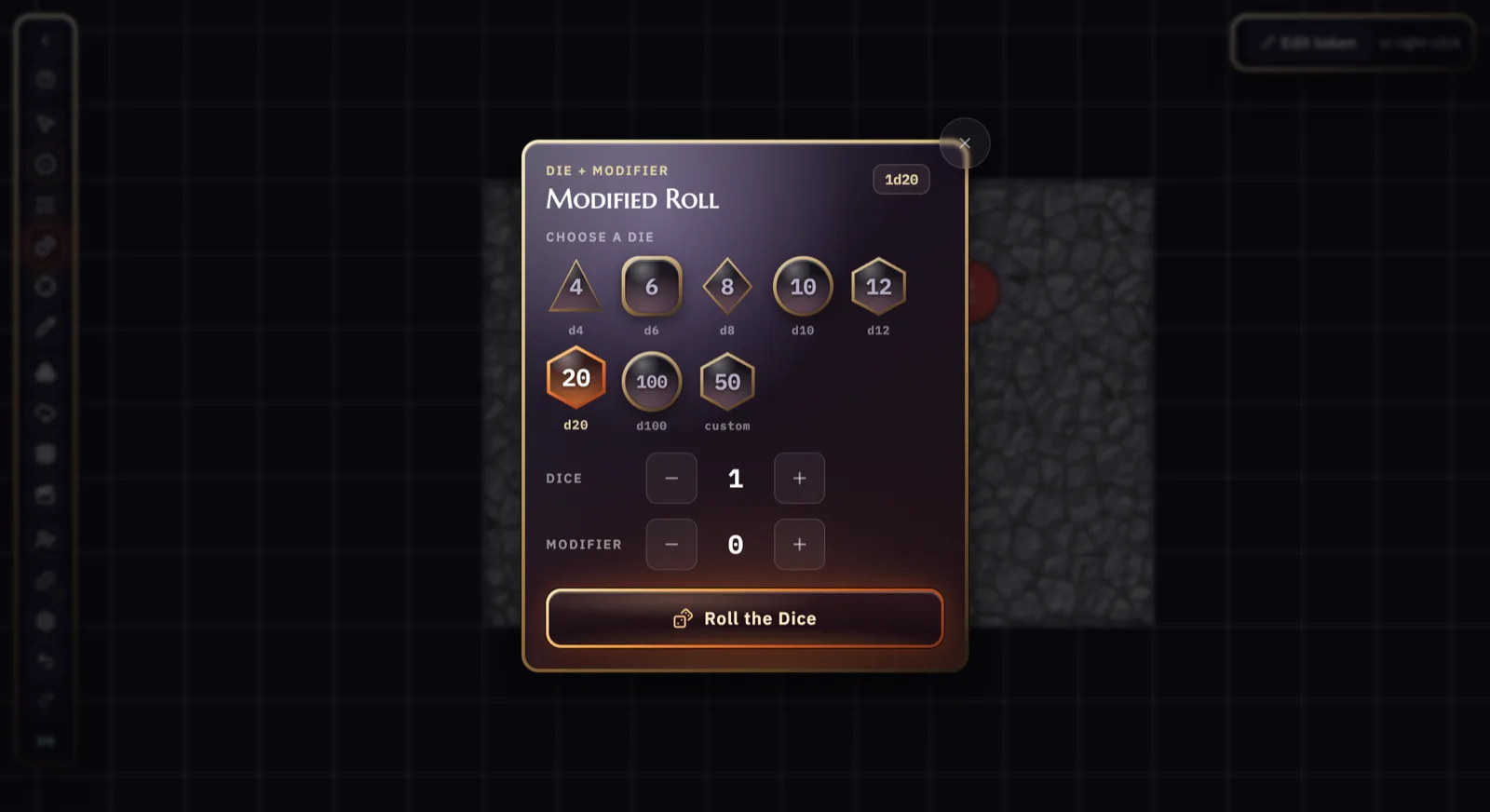
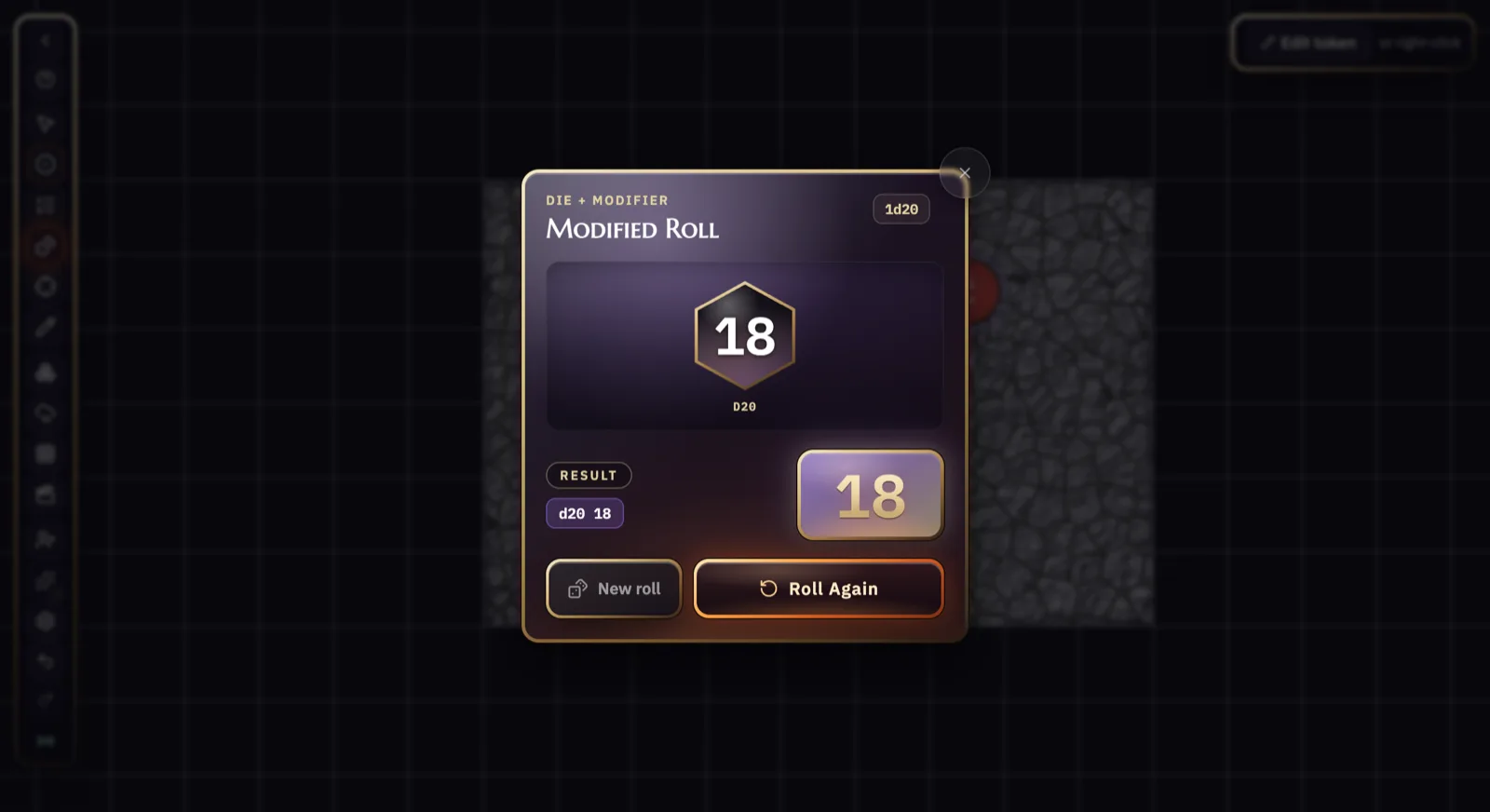
You can roll in the browser on Volvelle, for free, with no account: the free dice roller keeps the throws you make often as presets.
That's the kit. People, a place, a roll. Everything below is how a first evening actually feels.
Try one moment at the table
The whole game is a loop. The Game Master says what you see. You say what you try. Sometimes you roll. Then the Game Master says what happens next.
You can feel that loop without a campaign, without a character sheet, even without dice. Imagine: a sewer under a city, and something just moved in the dark.
Game Master: You're walking through the dark, damp corridor, the runoff water up to your ankles, the light of the torch showing the way, and your friends behind your back. Suddenly, you hear a splash of water ahead of you, and something moves in the dark. What do you want to do?
Player: I would like to draw my sword and raise the torch higher to see if I can spot what it is.
That's it. That's a turn. The Game Master's job now is to say what happens: the light helps, or it doesn't; the thing attacks, or it flees; you learn something new.
If you raise the torch, you might see yellow eyes for a second before they vanish. If you wait with your sword out, you hear it circle. If you call out, maybe it answers. Roll a d20 if you want luck in it. Then the Game Master says what that number means at this table.
You can try that at a kitchen table today, with no app at all, and with no book. If you have a simple 6-sided die, you can make a simple rule:
- 1-2 means your action fails
- 3-4 means your action succeeds with some consequences
- 5-6 means your action succeeds
There. You have a simple system to play.
Pick a character without reading the whole book
If you're a player, you need someone to be. For the first game, skip the novel-length backstory. Pick something that sounds like fun. A fighter. A wizard. A hunter. An elf diplomat who somehow ends up in a gladiator arena (like me!)
A character sheet looks like homework because most of it is lists and math. The choices that are actually yours are closer to: what kind of person is this, and what do they try when something moves in the dark?
Pick a fighter, a wizard, or a sneaky talker. Give them a name. When it is your turn, say what they try, then roll. Filling the whole sheet from the book is optional. Volvelle will walk the sheet later, behind a free account. The sheet does the math. It does not tell you how to play the person.
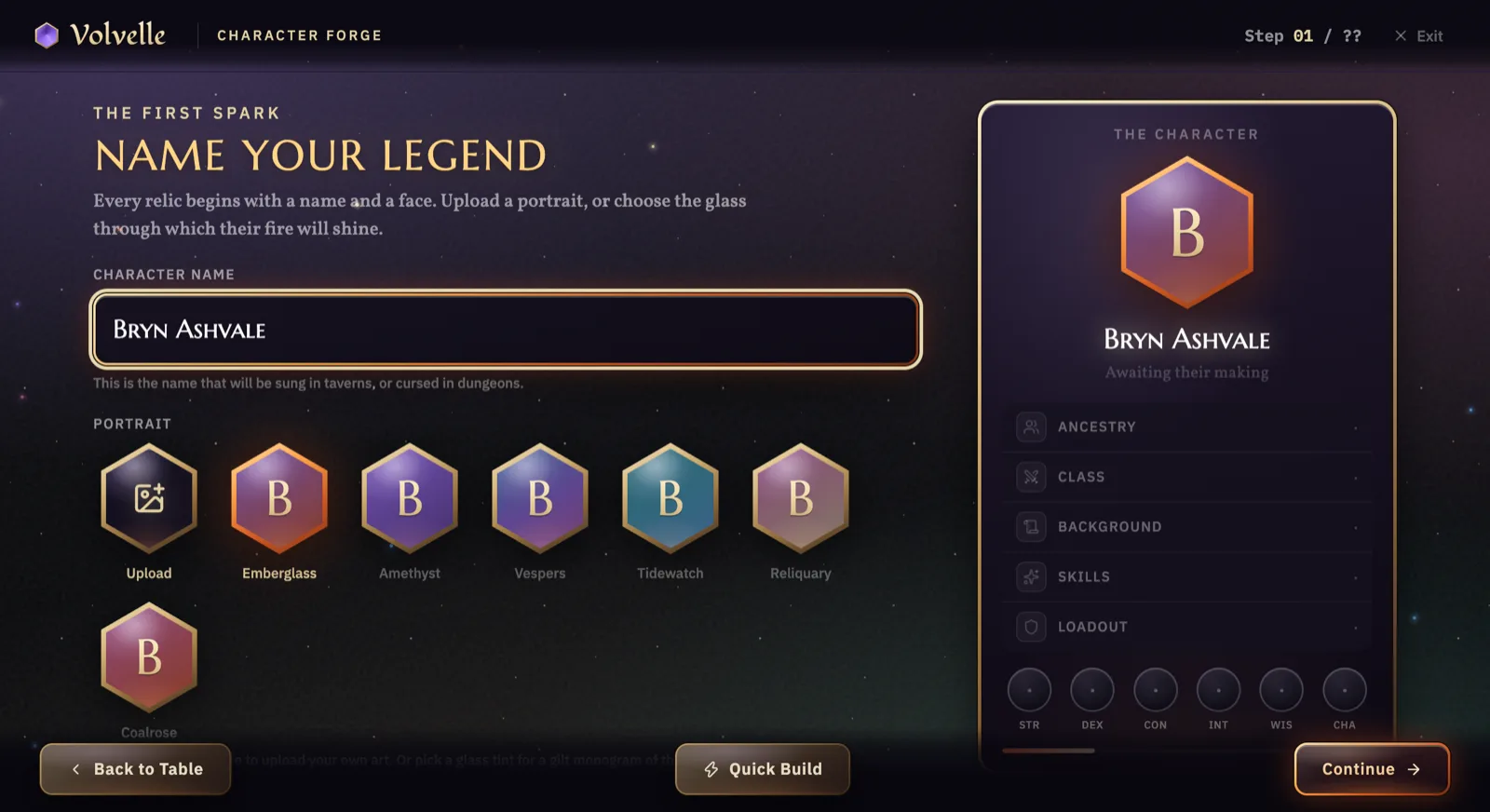
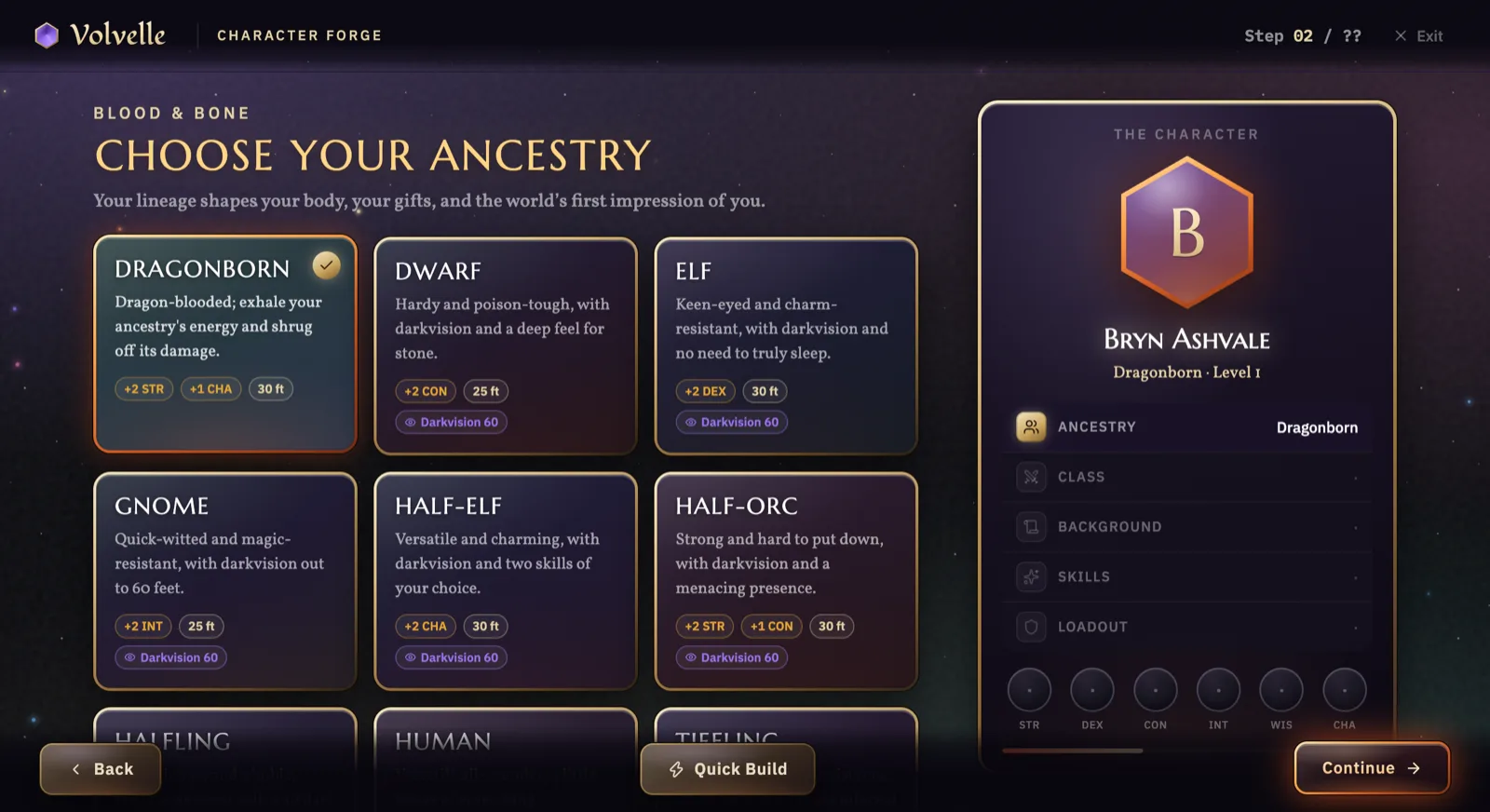
The full walkthrough is Creating your first character. You do not need it finished to sit down tonight. A name and a vibe is enough for one fight.
Draw a map you can all see
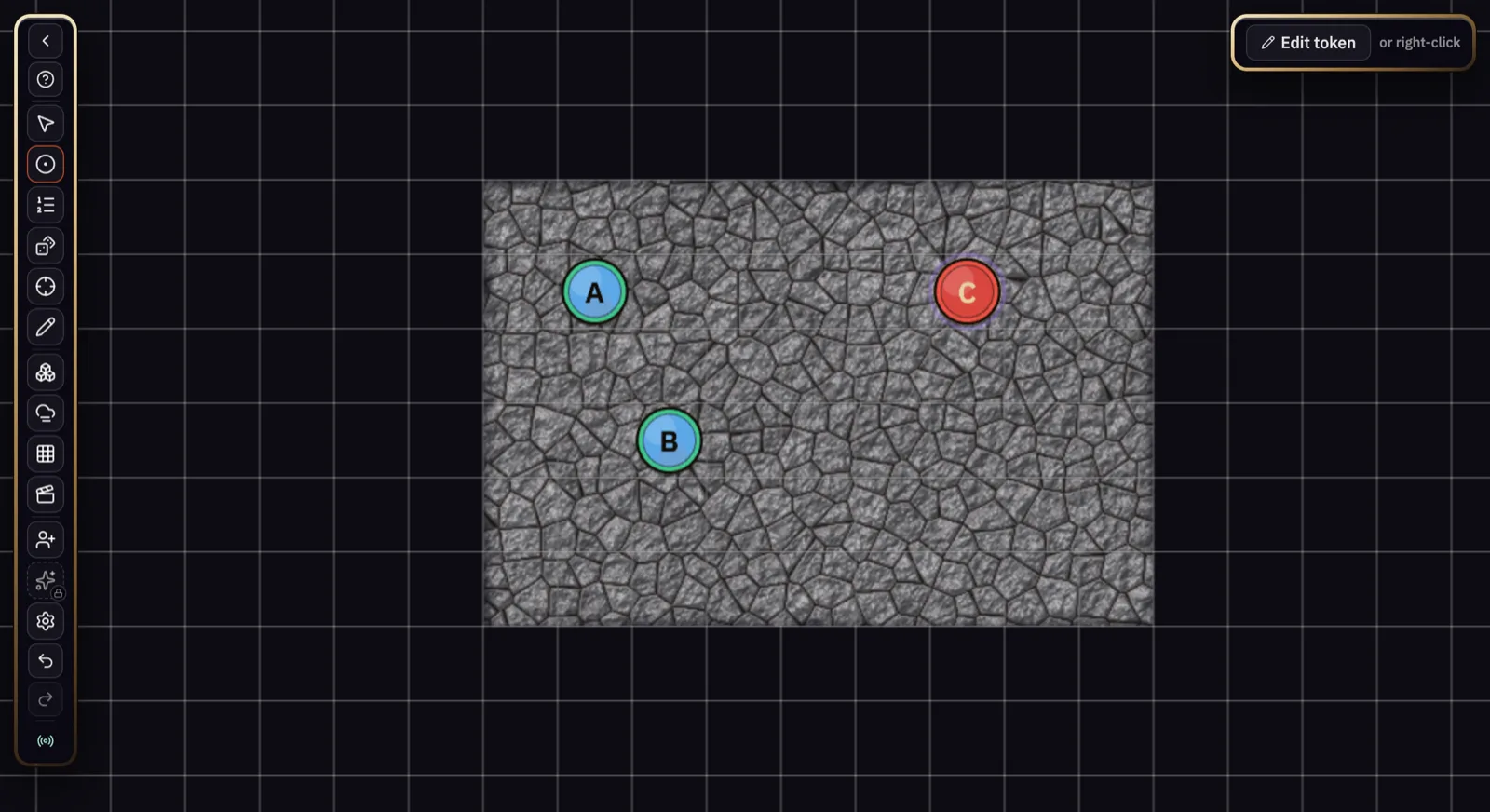
When a fight starts, it helps if everyone is looking at the same picture. That picture does not have to be beautiful. A rectangle for the room, a door, a few tokens. You can use a piece of ordinary paper, pencil, and some coins, and your imagination will do the rest. I've been doing that for years before I decided to make Volvelle for myself.
On Volvelle the free map is just that: a map, tokens, and dice. You bring the rules in your head.
Sketch the sewer as a hallway with one bend. Put a token for each person. When someone moves, move their token. When they roll, roll. That is a fight map.
Your first session, start to finish
Keep it short. One evening. One place. One fight. You can always play again.
- Pick a time and a place: a real table, or a call plus a map.
- Decide who is the Game Master for tonight. It can rotate later.
- Players pick a character that sounds fun. A name and a vibe is enough. If you want the guided sheet, that is a free Volvelle account anyone can use.
- Learn just enough rules to know how to test basic skills, attack, and defend.
- Open with a simple adventure hook you already have. The sewers. The tournament. The camp. Ask "what do you want to do?"
- When a fight starts, put it on a map. Roll. Describe what happens. Stop while people still want more.
The six steps above are the whole first session. It does not need a campaign, a Session Zero document, or the Player's Handbook on the table.
You do not need to memorize the rules first (trust me, I know)
D&D can be intimidating if you don't know the rules.
I'd like to say: don't worry. Many of us started this way.
For me, it was a summer camp. No fancy dice, no character sheets. Instead, it was two friends with a Warhammer Fantasy Roleplay rulebook, a few pencils and some paper, and a deck of cards to use instead of dice. We played two sessions. Players did not know the rules, and the DM knew them a little bit.
Looking back now, the sessions were not state of the art tabletop storytelling. It did not matter. I played an elf diplomat that was somehow sent to fight in a gladiator arena, hid behind another player's character (because someone at the table had the sense to pick a fighter), and then for some reason we were tasked to retrieve a griffon's egg for the princess. It didn't make much sense. Our characters were not even half-baked. I fell in love with the game anyway.
So trust me: you really don't need to memorize the rules to play. You need to know just enough.
What to do after you have played once
If people laughed, you already won. Schedule a second evening while the energy is there. Keep the same characters or throw them out. Both are allowed.
You do not need to memorize more rules between sessions. Google the one thing that confused you. Ask the table. Play again.
If you ran on paper and want less math next time, a free Volvelle account keeps the sheet and the map in one place. If you only needed the map, you can keep using it with no account.
Next in this series:
Dungeons & Dragons is a trademark of Wizards of the Coast. Volvelle uses the System Reference Document only.